
Historic Morocco: Following the Paths of the Desert Caravans
This journey will take you along the ancient caravan routes, across the Sahara Desert and its oases from Marrakech to Fez and beyond; rom the foothills of the Atlas Mountains to the endless sands of the desert, you will follow in the footsteps of the Berber nomads, through mountains, dunes, and villages hidden among the rocks.
The adventure begins in Marrakech, the famous Red City. Minarets, gardens, and bustling souks welcome you as the gateway to another world. It was from here that merchants and caravans once departed, tracing routes that carried gold, spices, and stories deep into the Sahara. Founded in the 11th century by the Almoravid dynasty, Marrakech rose at the edge of the desert, protected by imposing earthen walls. One of its most fascinating treasures is the underground irrigation system that still nourishes palm groves and secret gardens today.
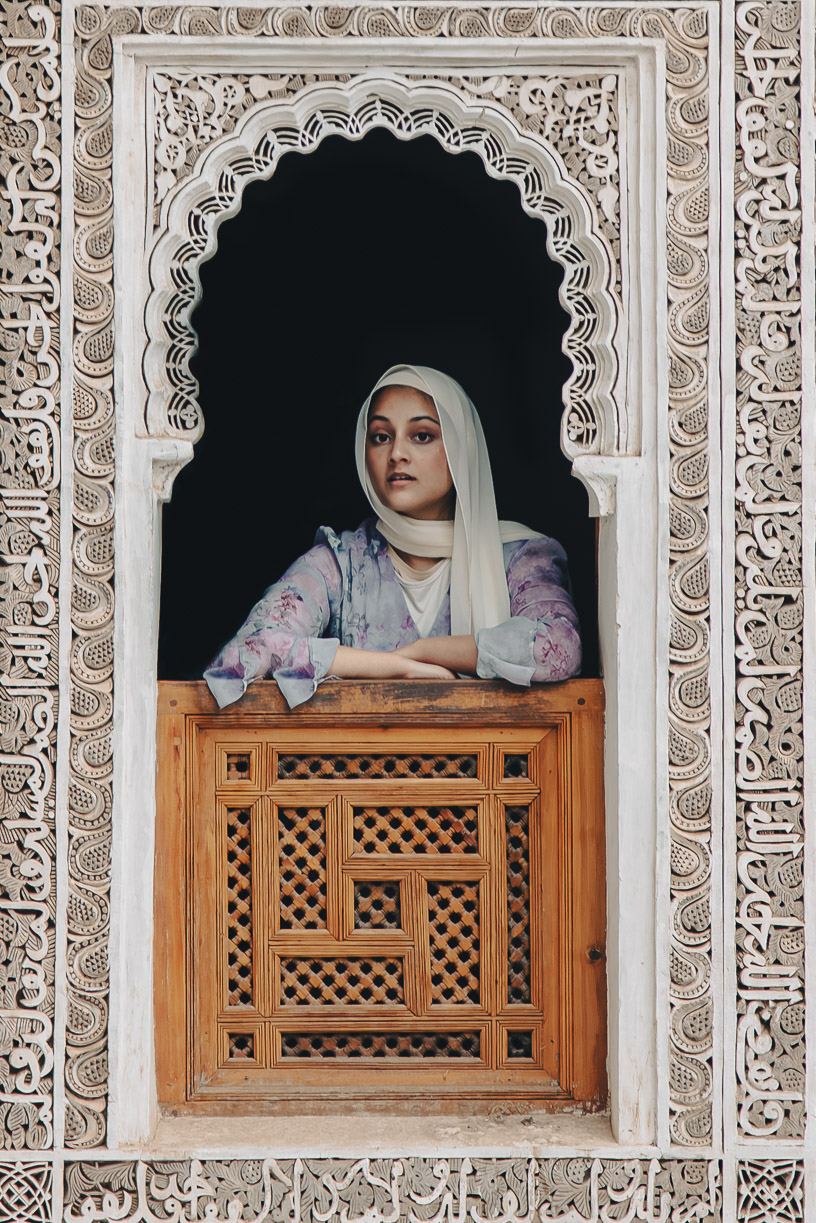
Morning in the Medina
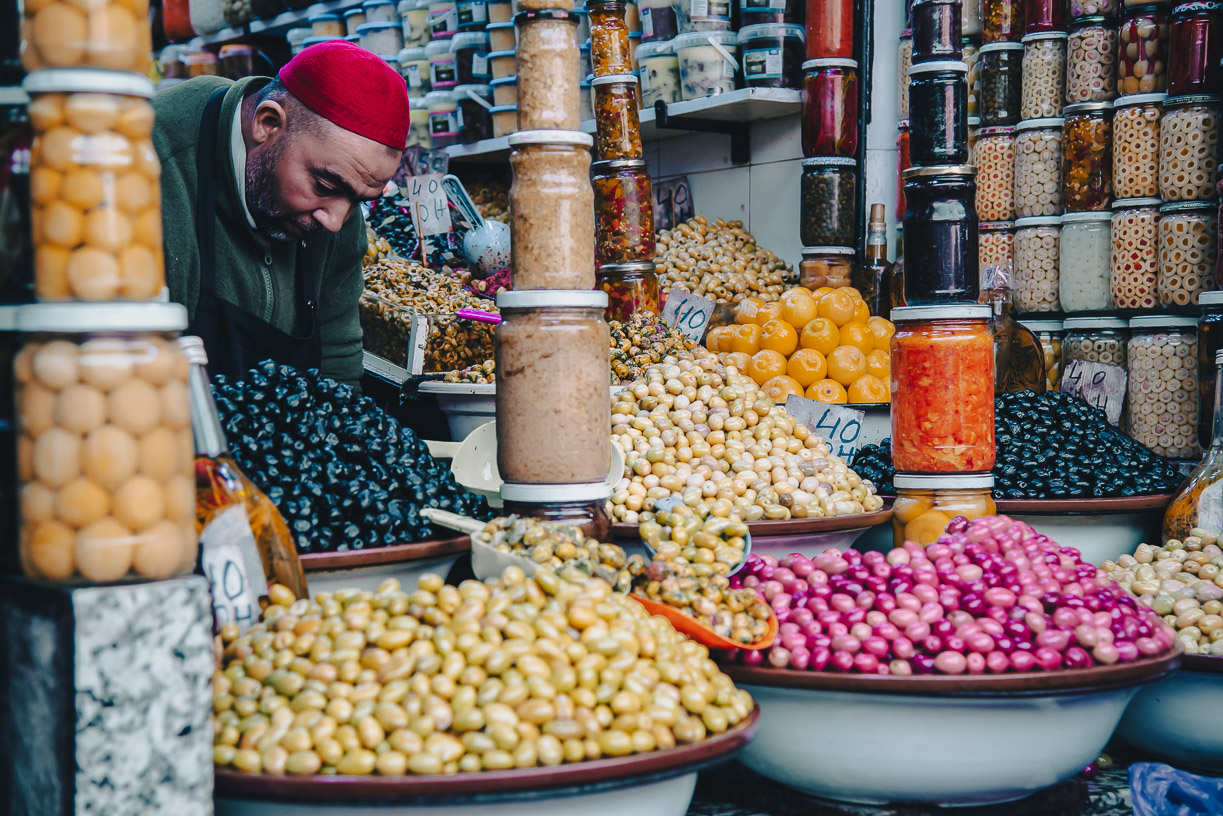
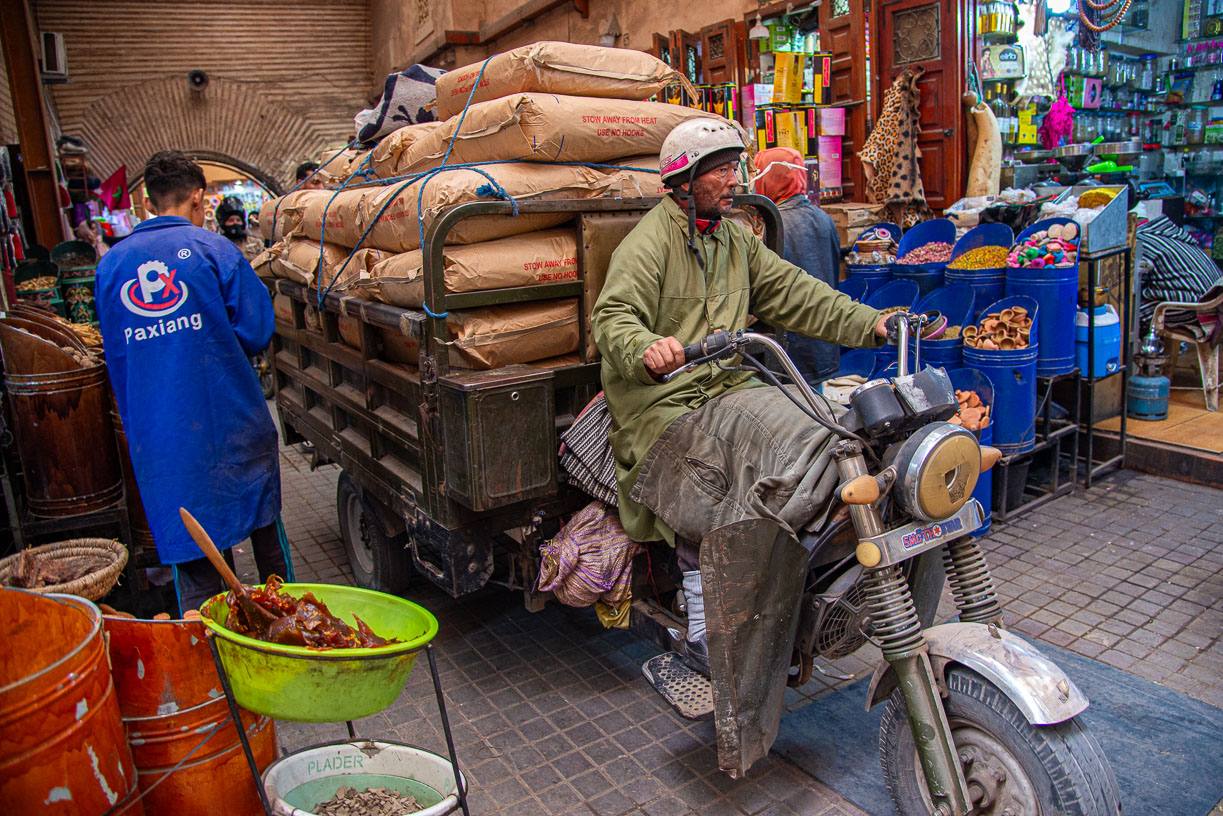
Spend your mornings exploring the medina, the old city, a labyrinth of narrow alleys where the best way to experience it is simply to get lost (though it’s best avoided after 8 p.m.). Here you’ll find stalls overflowing with spices, fruit, meat — even camel — and food stands offering traditional dishes like harira soup, lamb or sausage skewers (brochettes or merguez), and the city’s signature dish: tanjia, a slow-cooked lamb stew flavored with lemon.
Into Berber culture
To dive into Berber culture, or more precisely Amazigh (Imazighen), visit the Tiskiwin Museum, housed in two splendid riads, which tells the story of the nomadic caravans. On Rue Bin Lafnadek, you’ll also find the Maison de la Photographie, home to a remarkable collection of images documenting Morocco’s evolution from 1870 to the present day.
The Beating Heart of Marrakech: The Souks
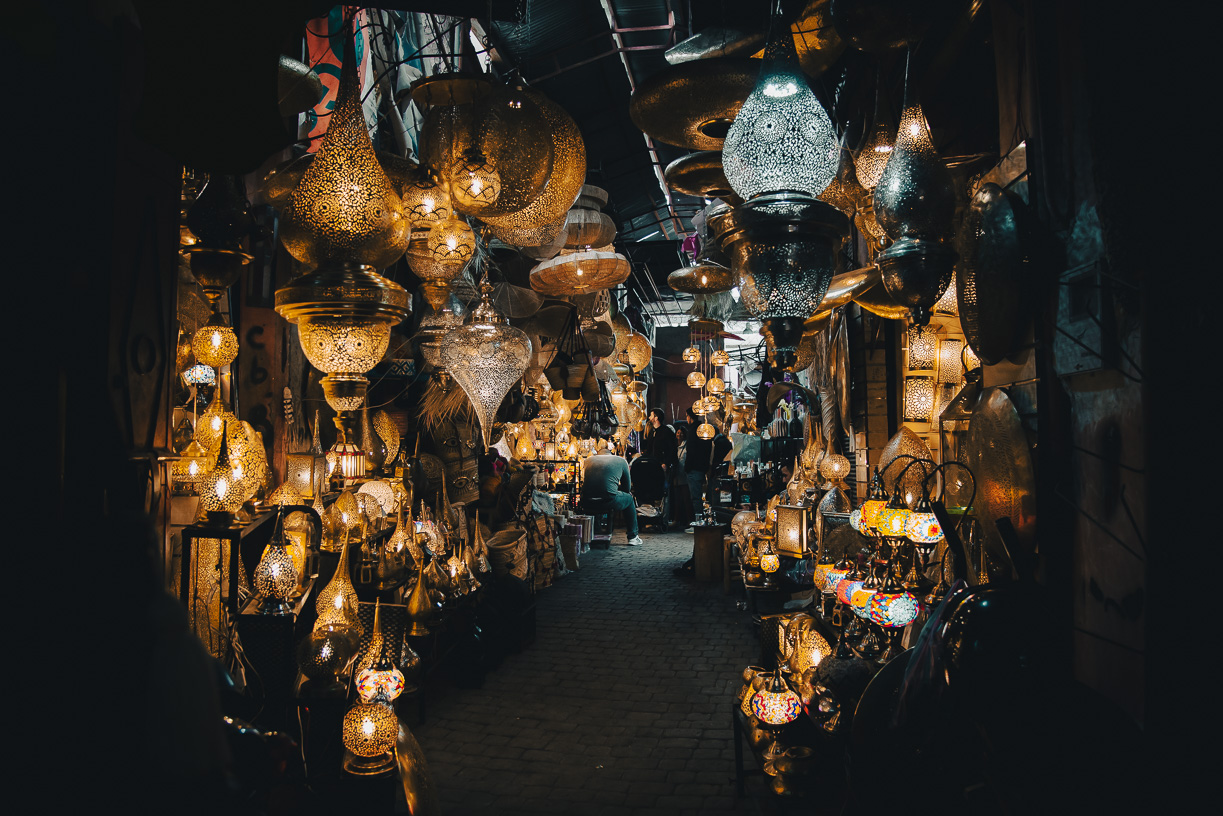
The souks are a world of their own. From Semmarine, the most touristy, to Souk Ableuh with its dried fruits and spices, and on to the souks of the blacksmiths (Haddadine), the dyers, and the carpets (Souk Zrabi). Wandering through these markets, you’ll see artisans at work and encounter vibrant goods, including the jellaba, the hooded robe that even inspired the Jedi costumes in Star Wars.
Jemaa el-Fna: a Living Stage
Be sure to admire from the outside the Koutoubia Mosque, with its impressive 1147 minaret (non-Muslims are not allowed inside). Just a short walk away lies Jemaa el-Fna, the city’s beating heart. In the evening, the square turns into a giant open-air spectacle, with snake charmers, musicians, street vendors, and countless food stalls. Dining here is an unforgettable experience, though be sure to clarify your order carefully to avoid an unexpectedly high bill.
Architecture and Art
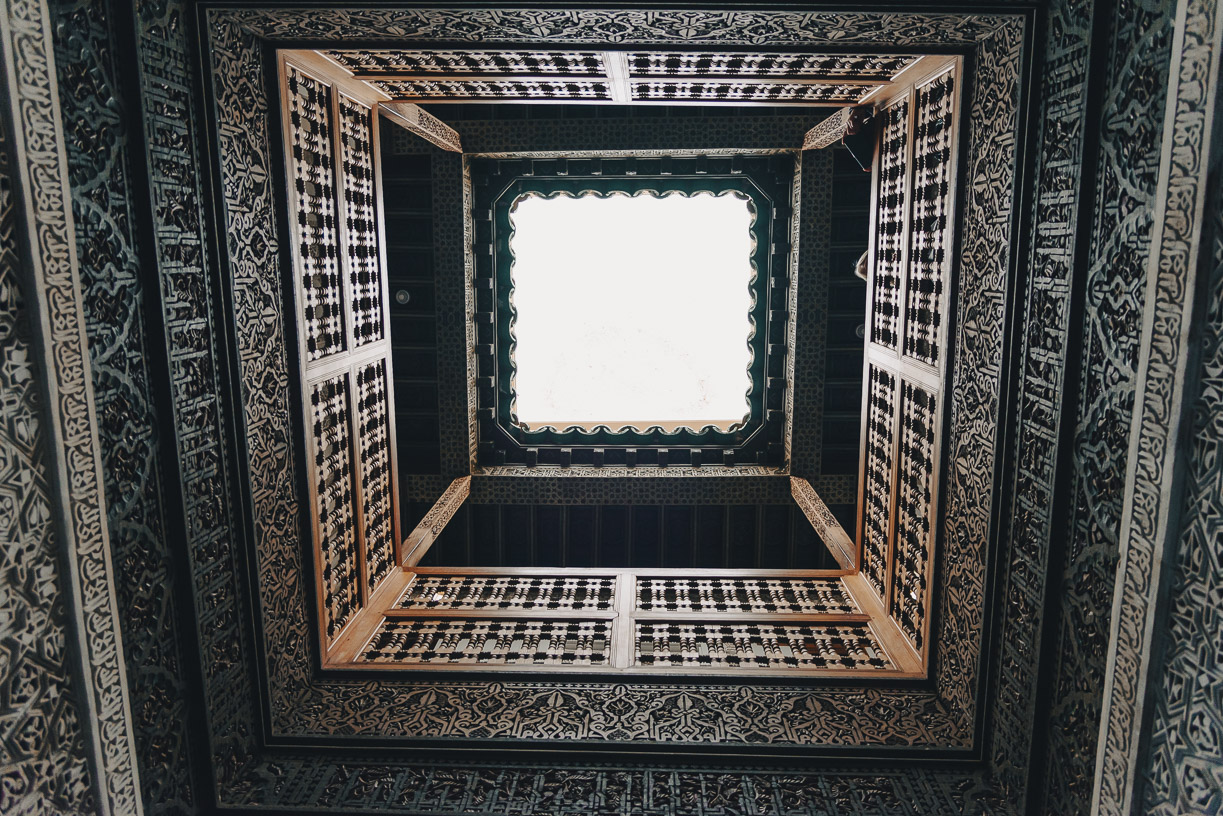
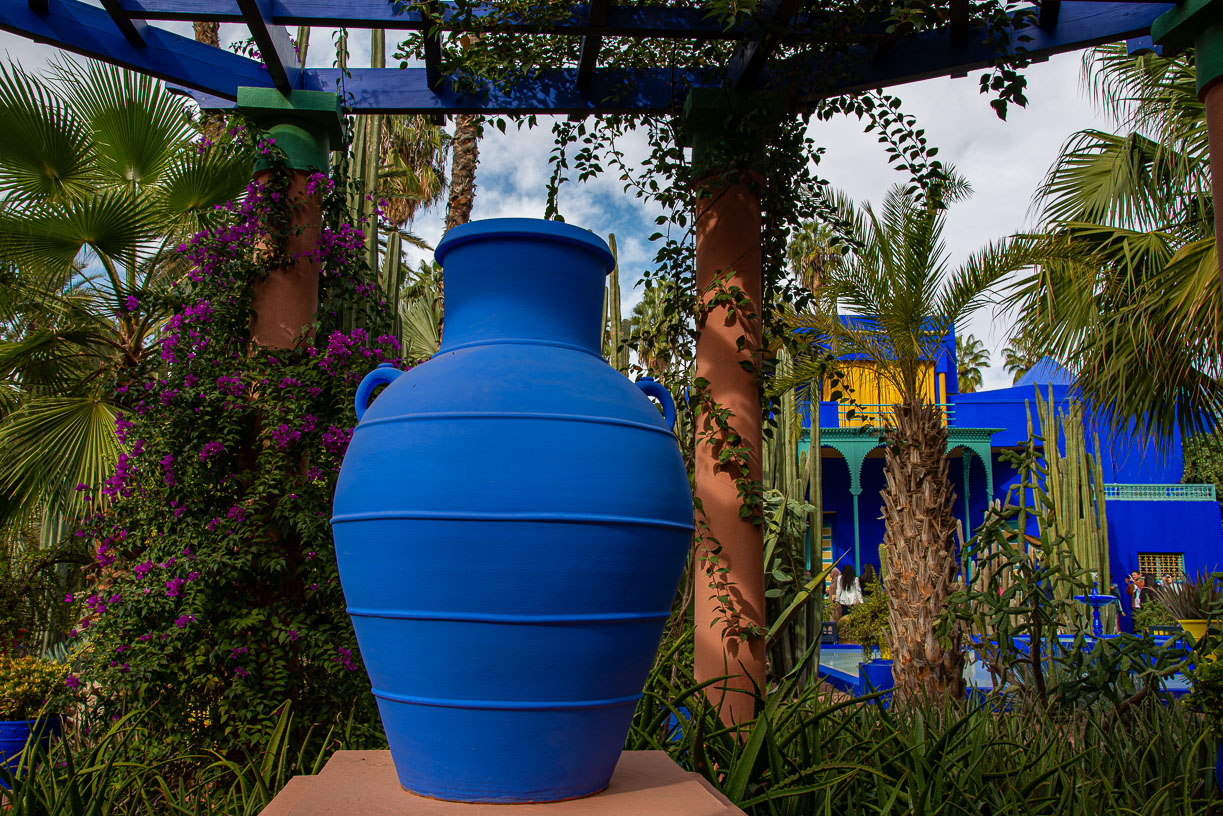
From an architectural perspective, don’t miss the Medersa of Ali ben Youssef, the historic Quranic school, and the iconic Jardin Majorelle, the villa-museum of artist Jacques Majorelle, whose gardens feature exotic plant species from all over the world. Also worth visiting are Le Jardin Secret and the Bahia Palace, built by Si Moussa, once a slave who rose to become a vizier.
And to truly immerse yourself in the city’s atmosphere? Stay overnight in an authentic riad, where you can breathe in the essence of Moroccan tradition.
Atlas Mountain
Snow-capped peaks, hidden valleys, and Berber villages offer a journey through breathtaking landscapes and ancient traditions.
Aït Bougmez Valley – “The Happy Valley”
Located northeast of Marrakech, the Aït Bougmez Valley is one of Morocco’s most spectacular yet least-visited destinations. Known as the “Happy Valley” for its serene atmosphere and villages nestled among terraced fields and snow-capped peaks, it’s an ideal base for one or multi-day treks. From here, trails lead toward Mount M’Goun (4,071 m), the country’s second-highest peak, as well as hidden Amazigh villages where time seems to stand still.
Ounila Valley
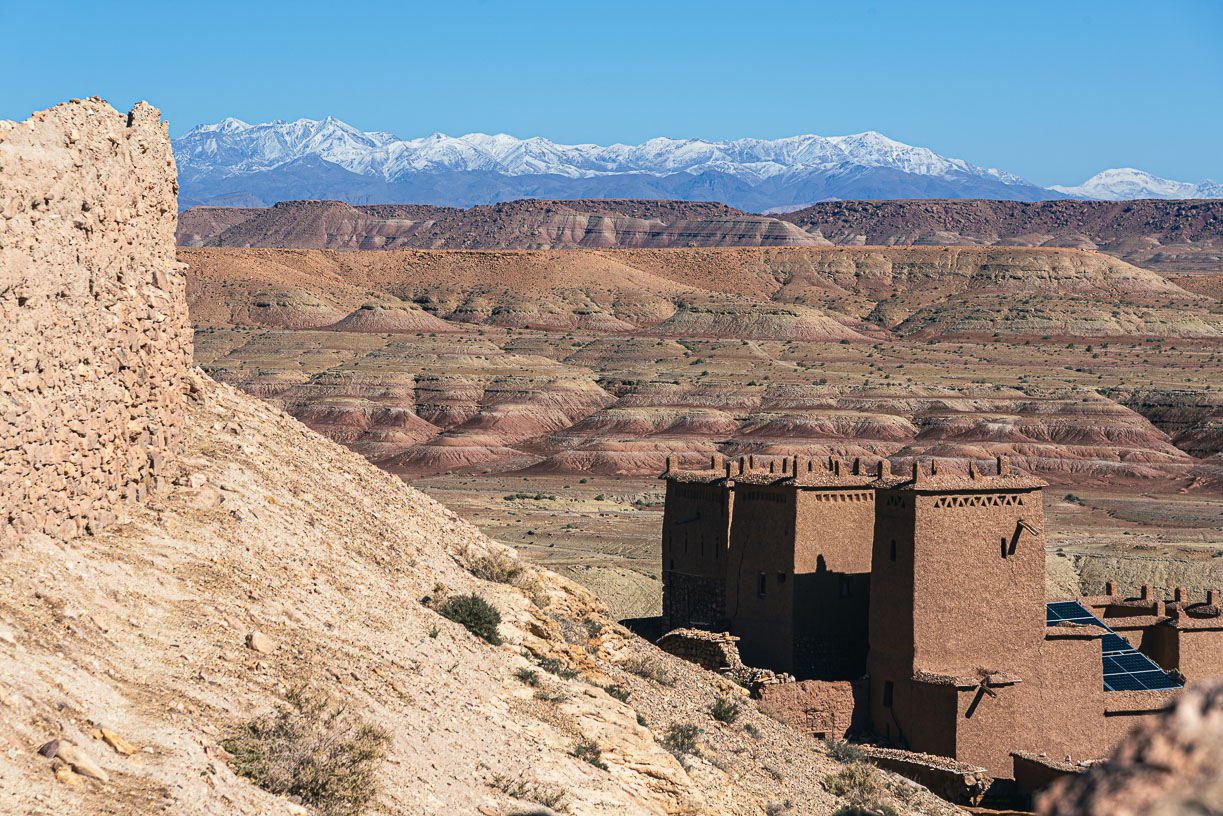
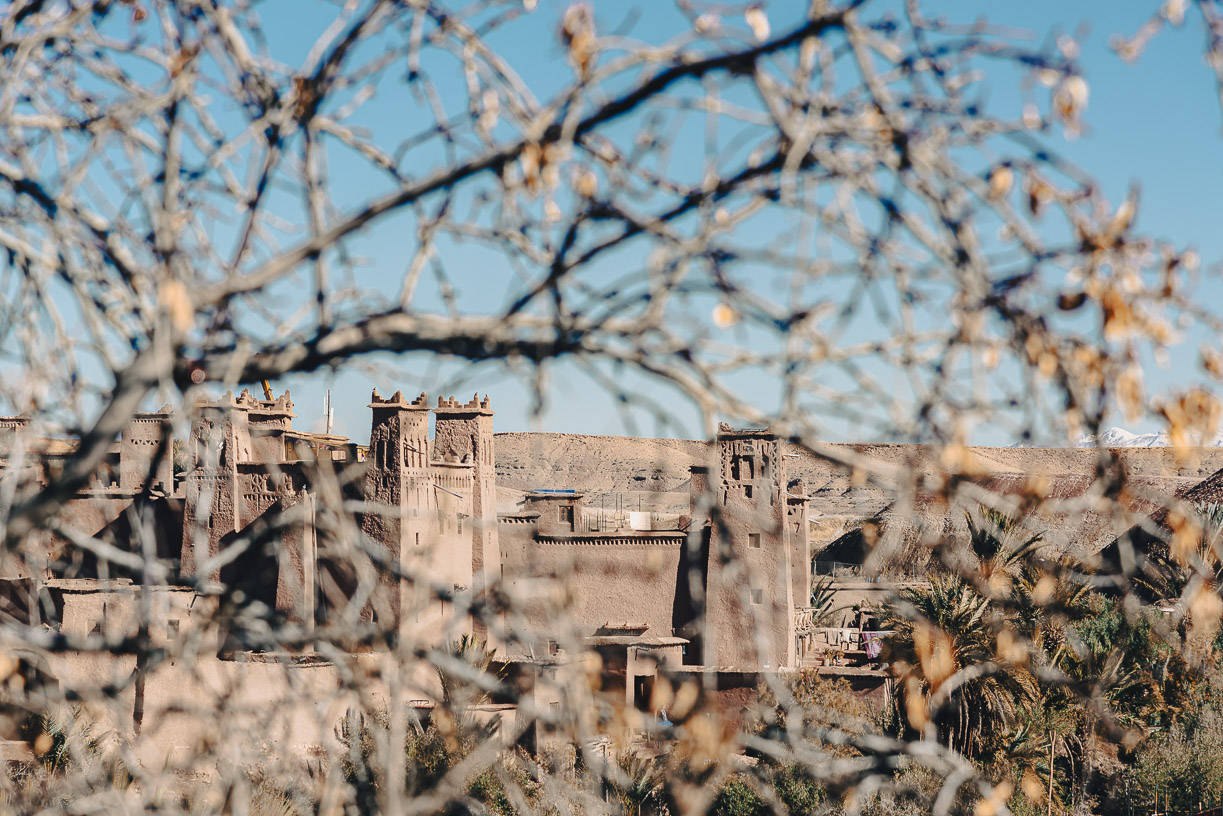
From the Tizi n’Tichka Pass, the road descends south into the Ounila Valley, dotted with earthen villages and ancient kasbahs. Among them is the Telouet Kasbah, once the seat of the powerful Glaoui family, lords of the Atlas. Now in ruins yet still captivating, it preserves mosaics and grand halls that hint at its opulent past. The road leading there (P1506) is one of the most scenic, winding through ochre-colored canyons and adobe settlements.
Continue onward to the UNESCO World Heritage site of Aït Benhaddou, a mud-brick fortress that was a strategic caravan stop — and a filming location for countless famous productions, including Game of Thrones.
Skoura and the Valley of a Thousand Kasbahs
Before heading toward the Dades, the oasis of Skoura opens up with its fertile palm groves and abandoned kasbahs. The best known is the Amridil Kasbah, but the surrounding villages hide forgotten fortresses and small gardens still irrigated by traditional systems.
The Dades Valley – Fortresses and Stone Gorges
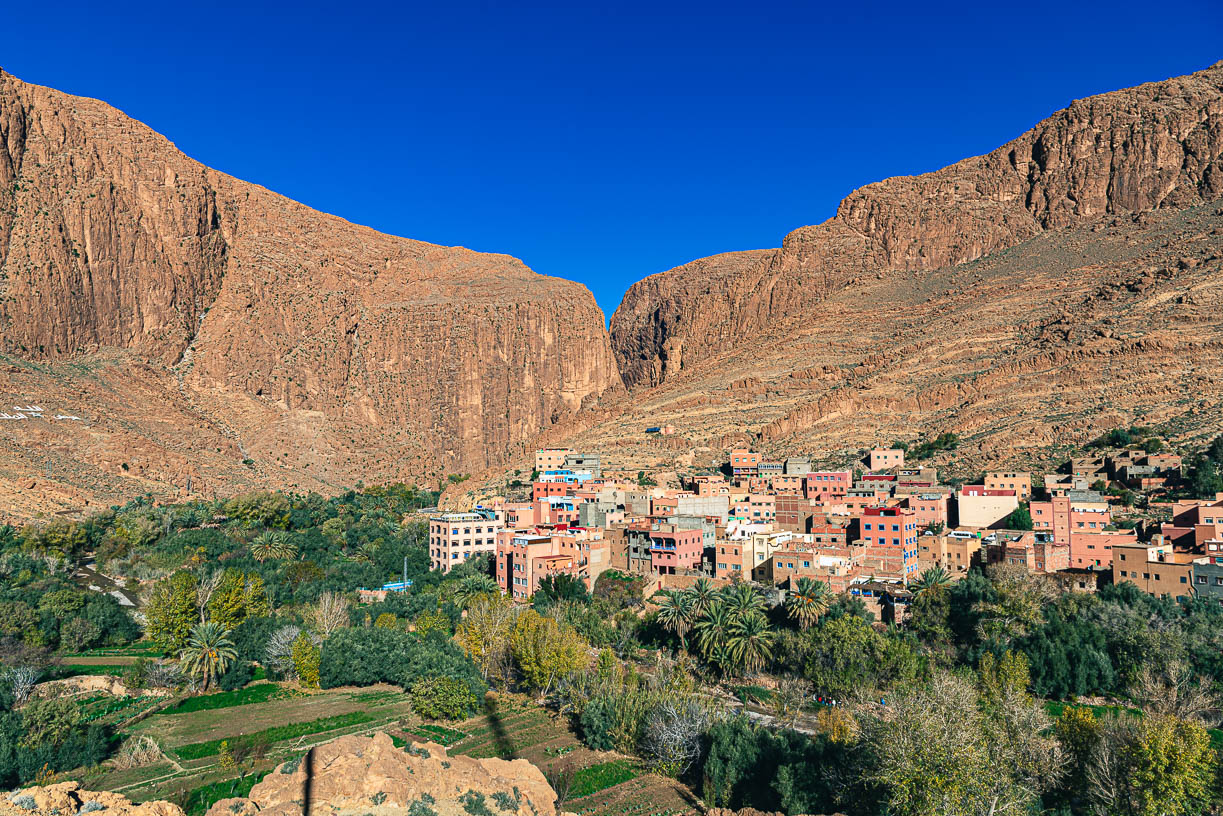
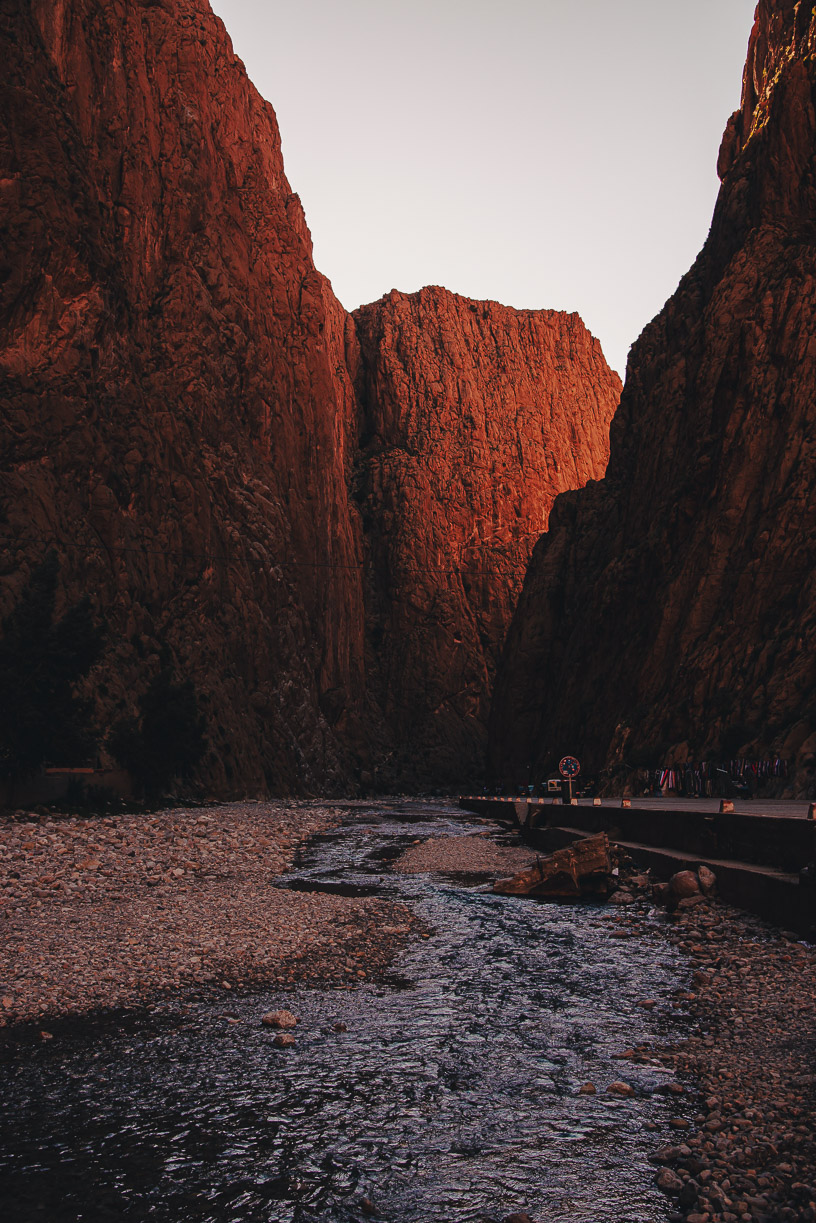
Further east, the mountains give way to dramatic gorges. The Dades Gorges, carved by water and wind, form a natural labyrinth of red rock and dizzying canyons. Amazigh villages cling to the cliffs, guardians of centuries-old traditions and a deep bond with the land. Hiking trails reveal cultivated terraces, hidden oases, and the resilience of a people who have made the desert their home.
The Sahara – Between Dunes and Stars
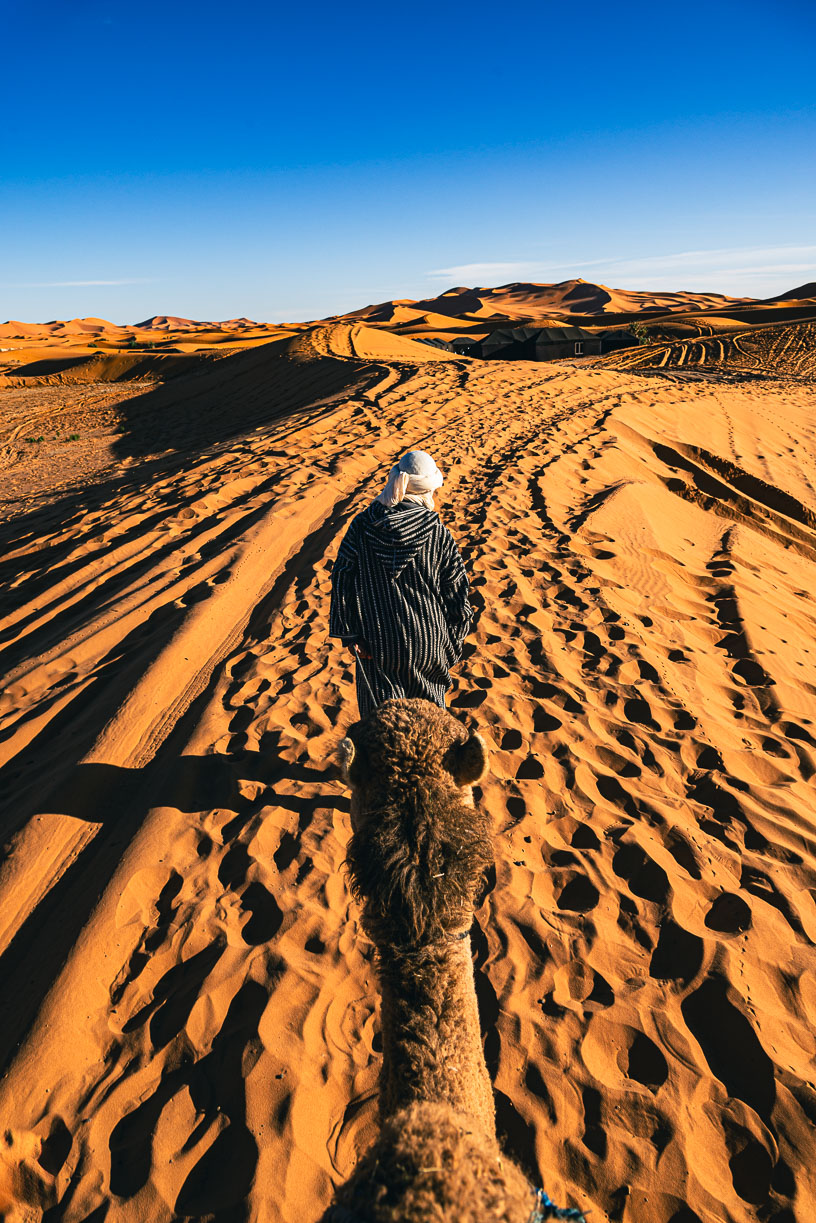
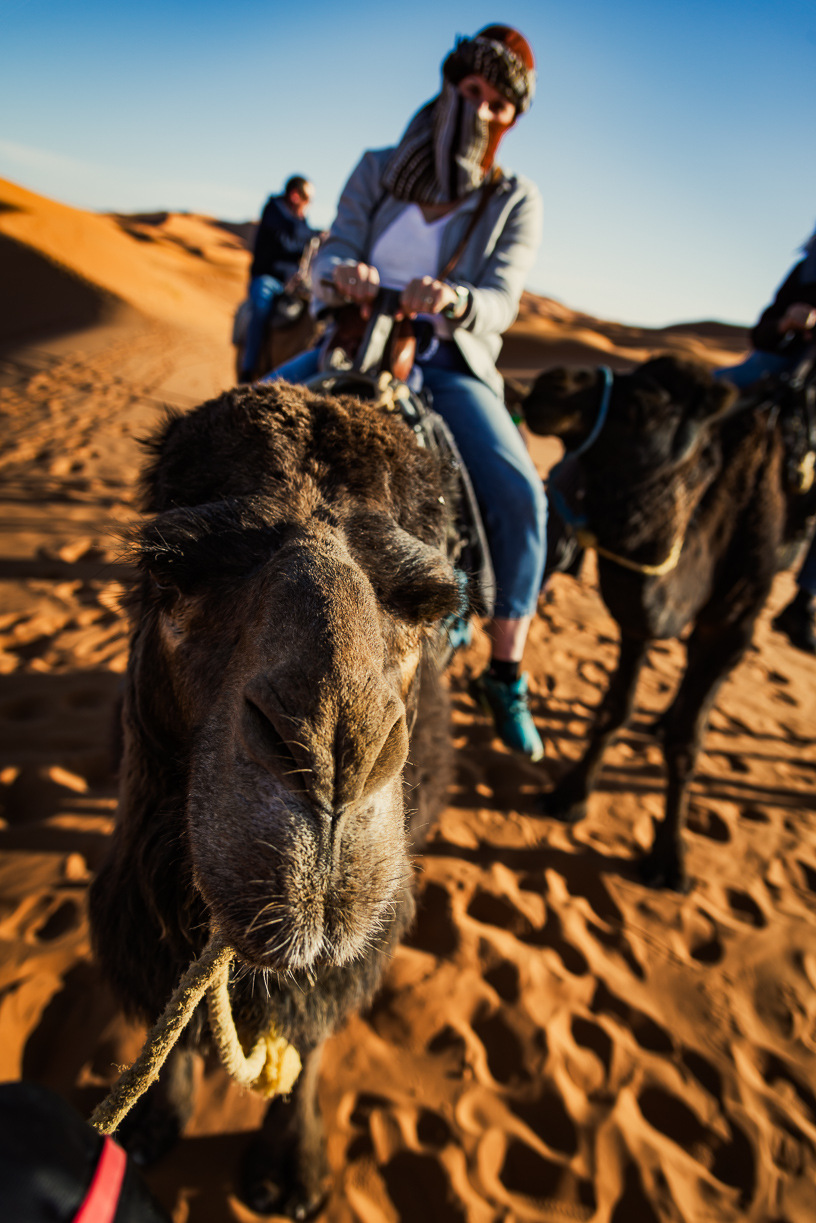
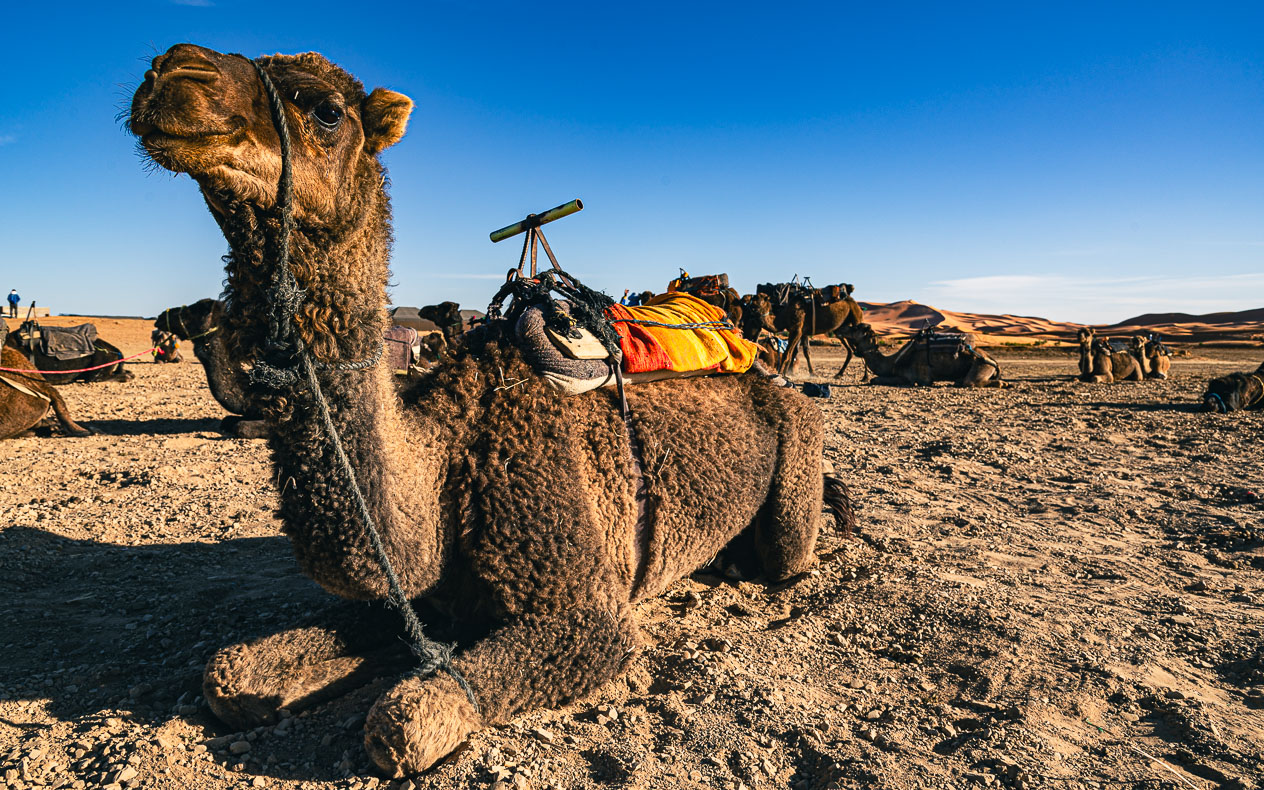
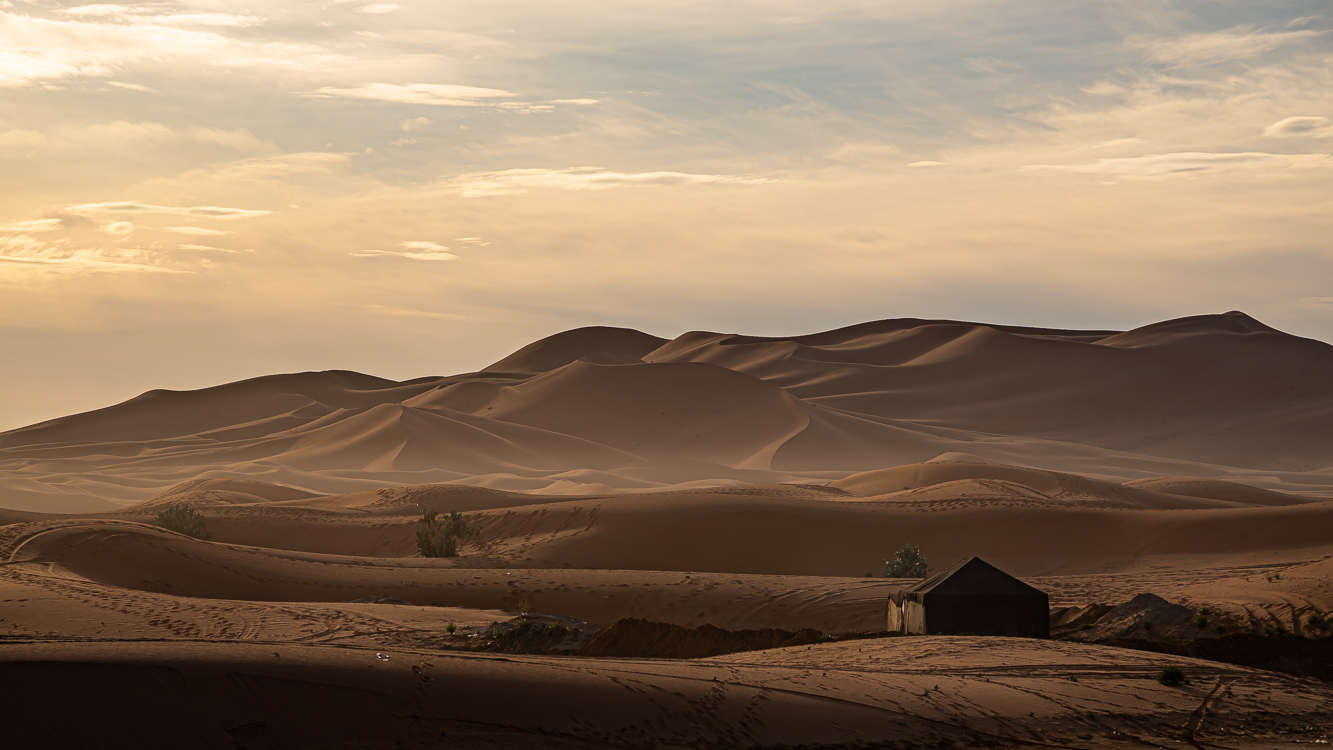
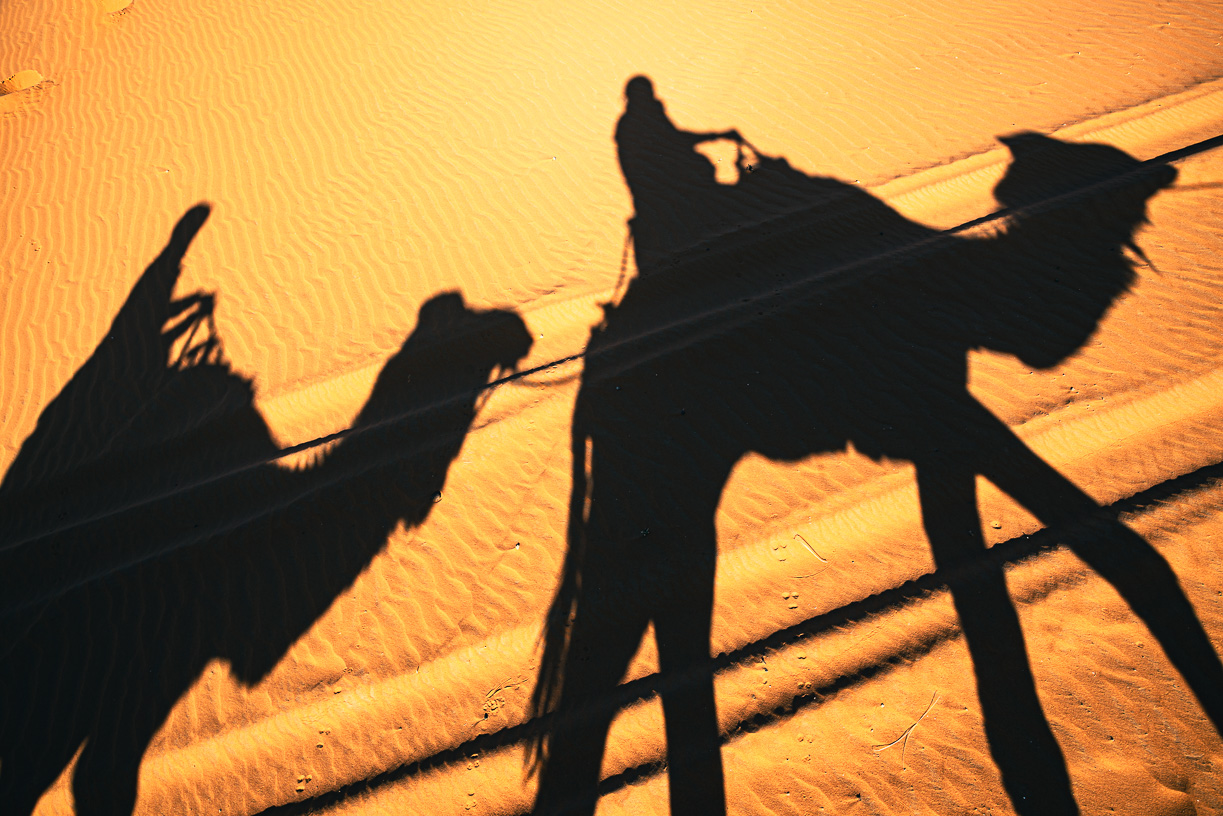
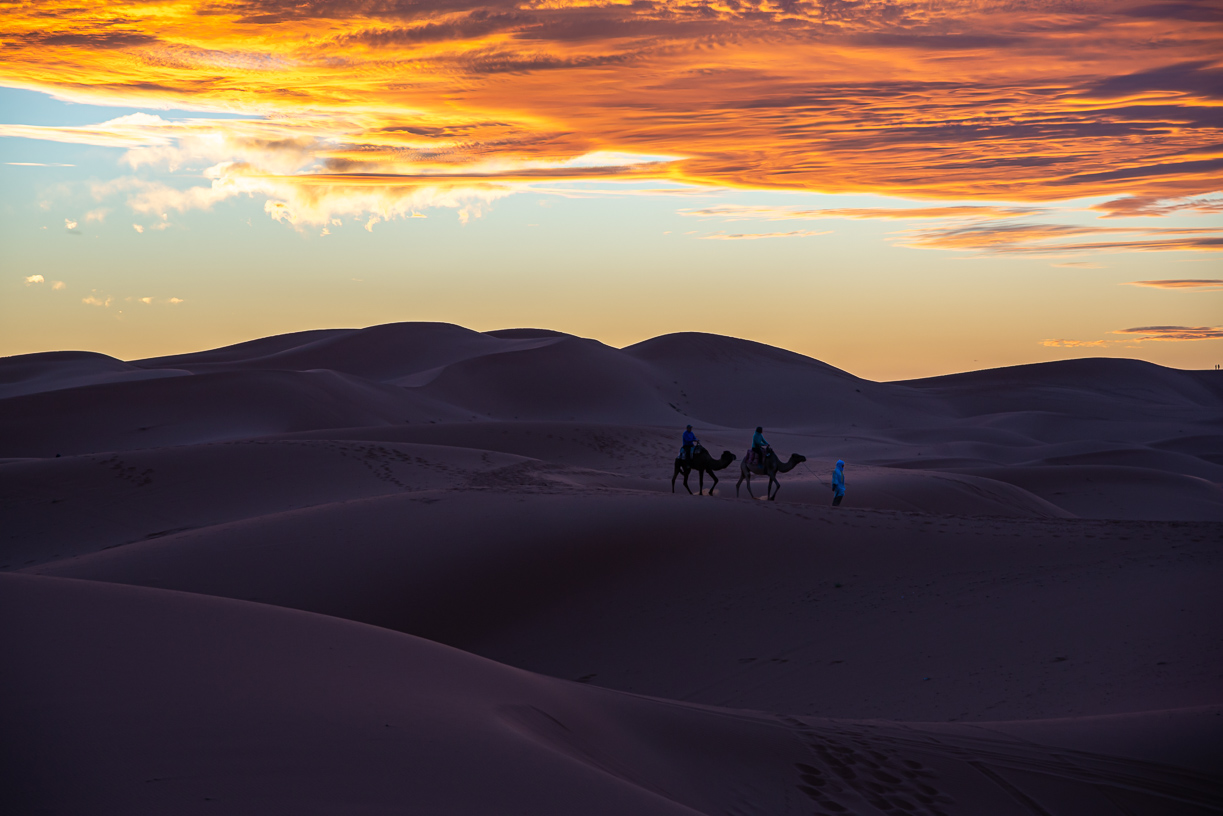
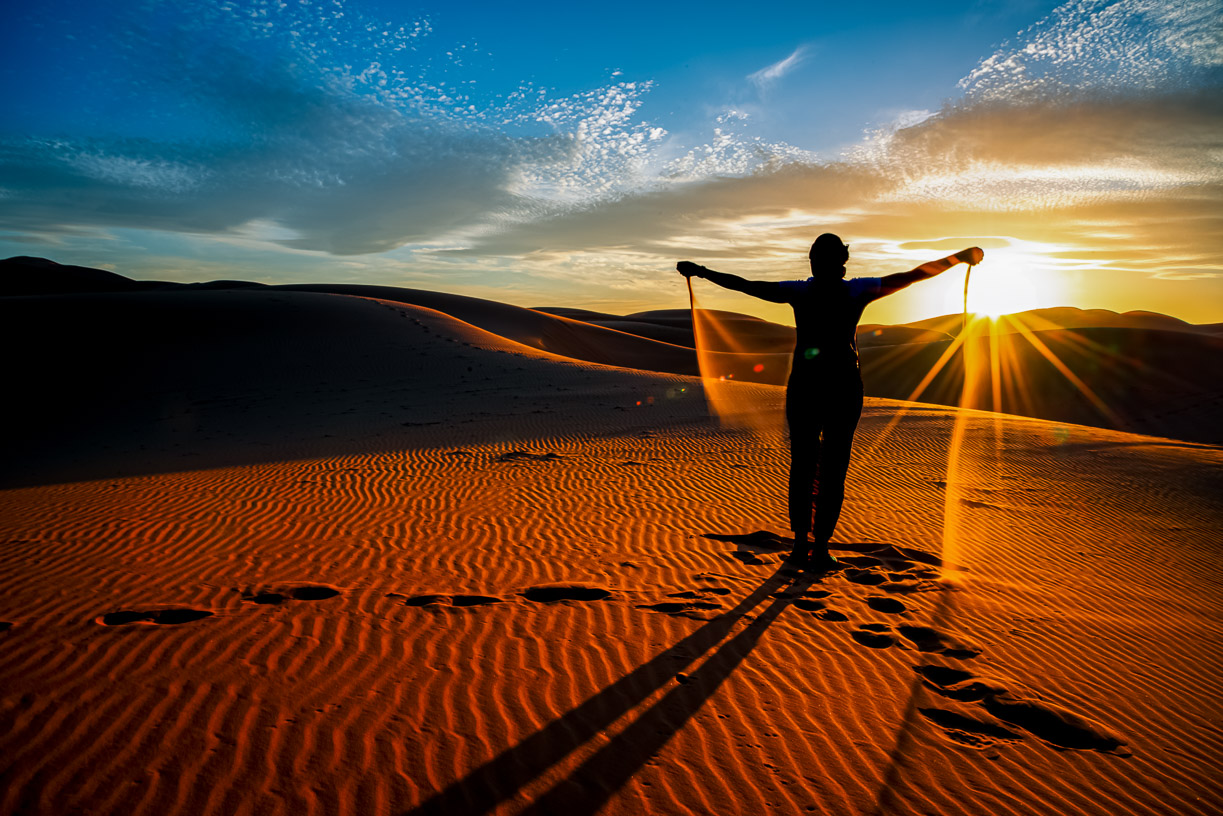
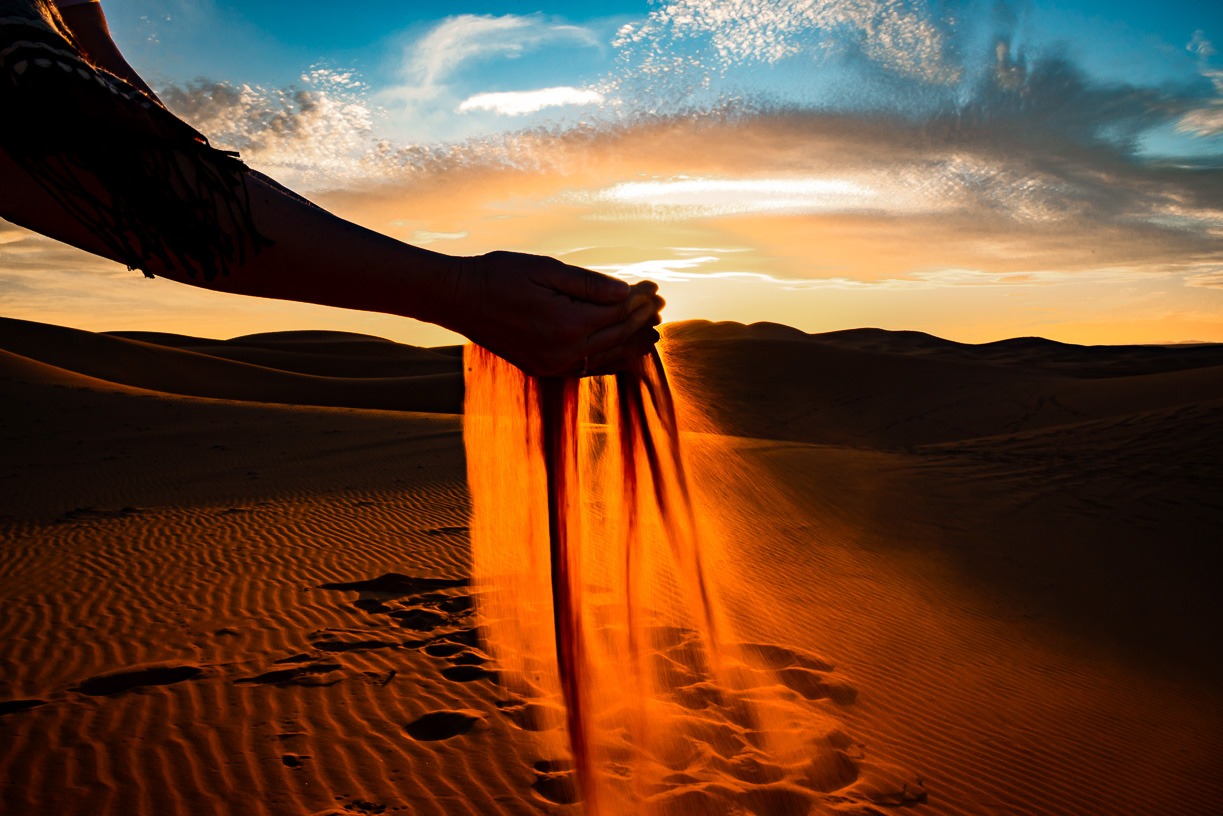
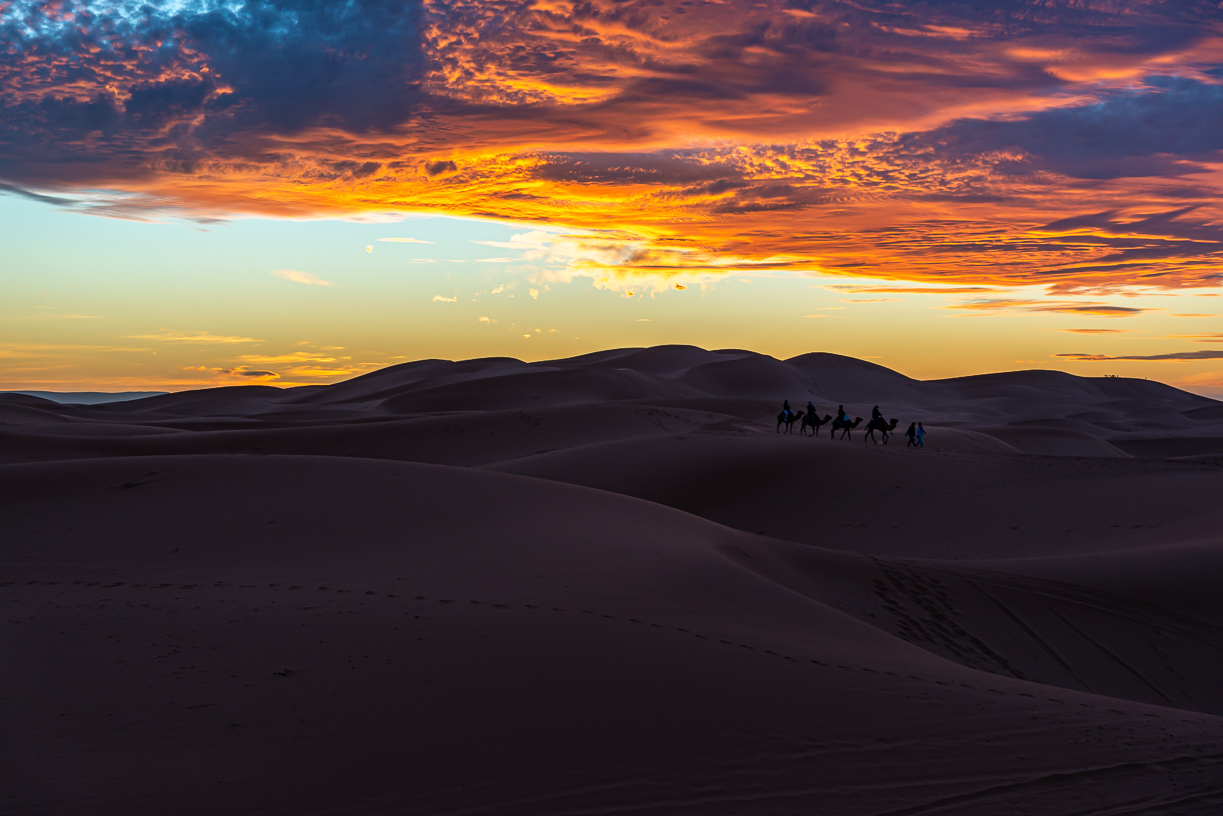
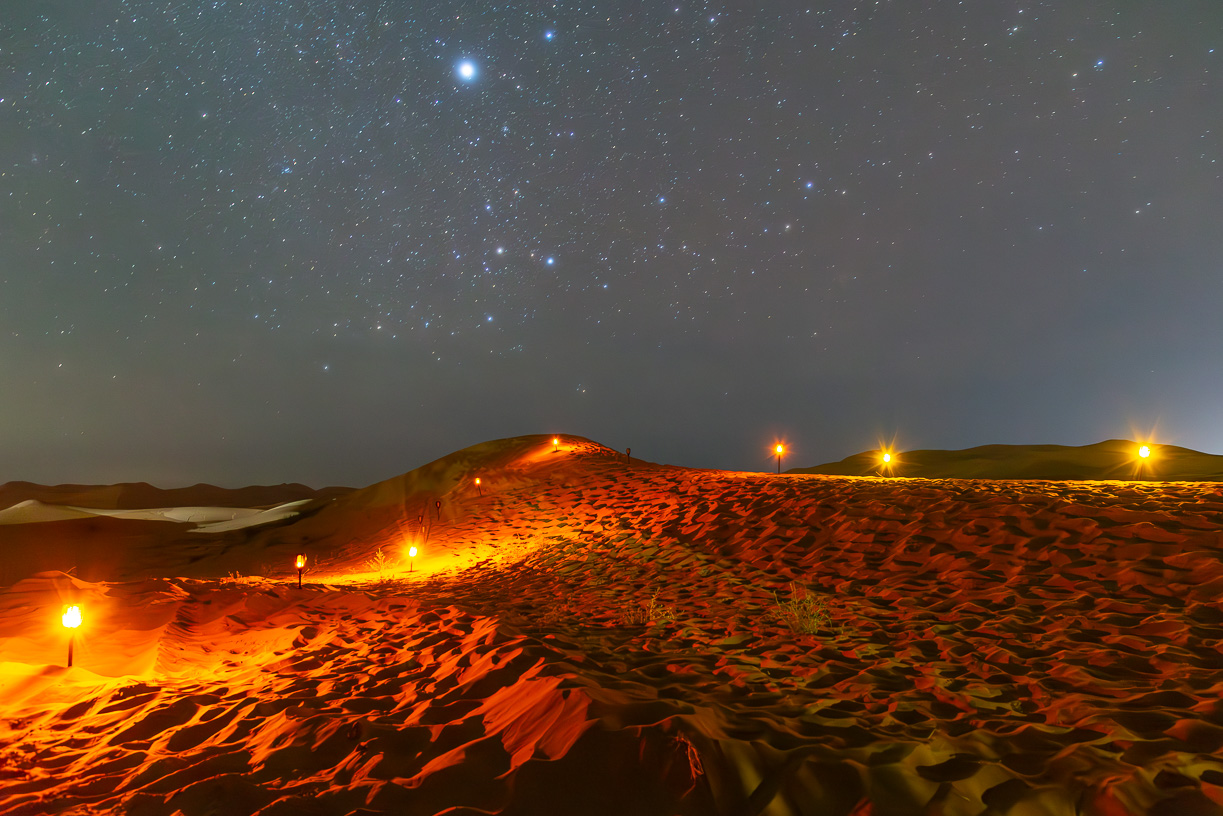
The caravan route finally reaches the heart of the desert, toward Merzouga and the golden dunes of Erg Chebbi. Here the landscape is stripped to its essence: sand, sky, and silence. Nights beneath the stars, in Berber tents with the distant sound of drums, evoke the ancient spirit of the caravans that once pressed on toward Timbuktu and the East.
Fez: The Labyrinth of Time
From the desert, the route turns north to Fez, Morocco’s most ancient imperial city. Its medina, one of the largest car-free urban areas in the world, is a maze of alleys, souks, mosques, and hidden courtyards. To walk here is to move through centuries of artisanship, faith, and memory.
Attarine and Bou Inania Madrasa
Begin at the Bab Bou Jeloud, the Blue Gate, and step into the heart of Fes el-Bali. Here, life unfolds in a maze of narrow streets where donkeys, not cars, carry goods.
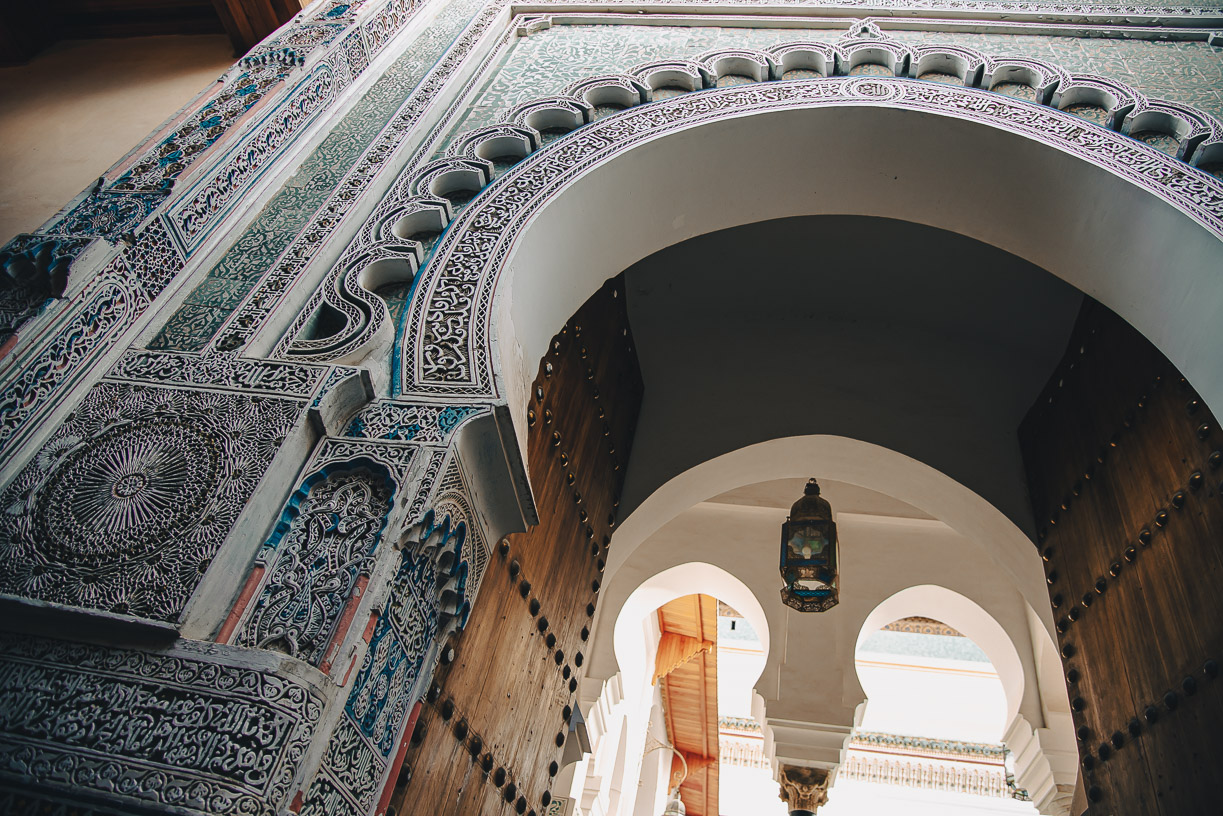
Then, visit the Bou Inania Madrasa, a masterpiece of Marinid architecture with its cedarwood carvings, zellij tilework, and tranquil courtyard. Finally, explore the Attarine Madrasa, equally exquisite, smaller but deeply atmospheric.
Chouara Tanneries
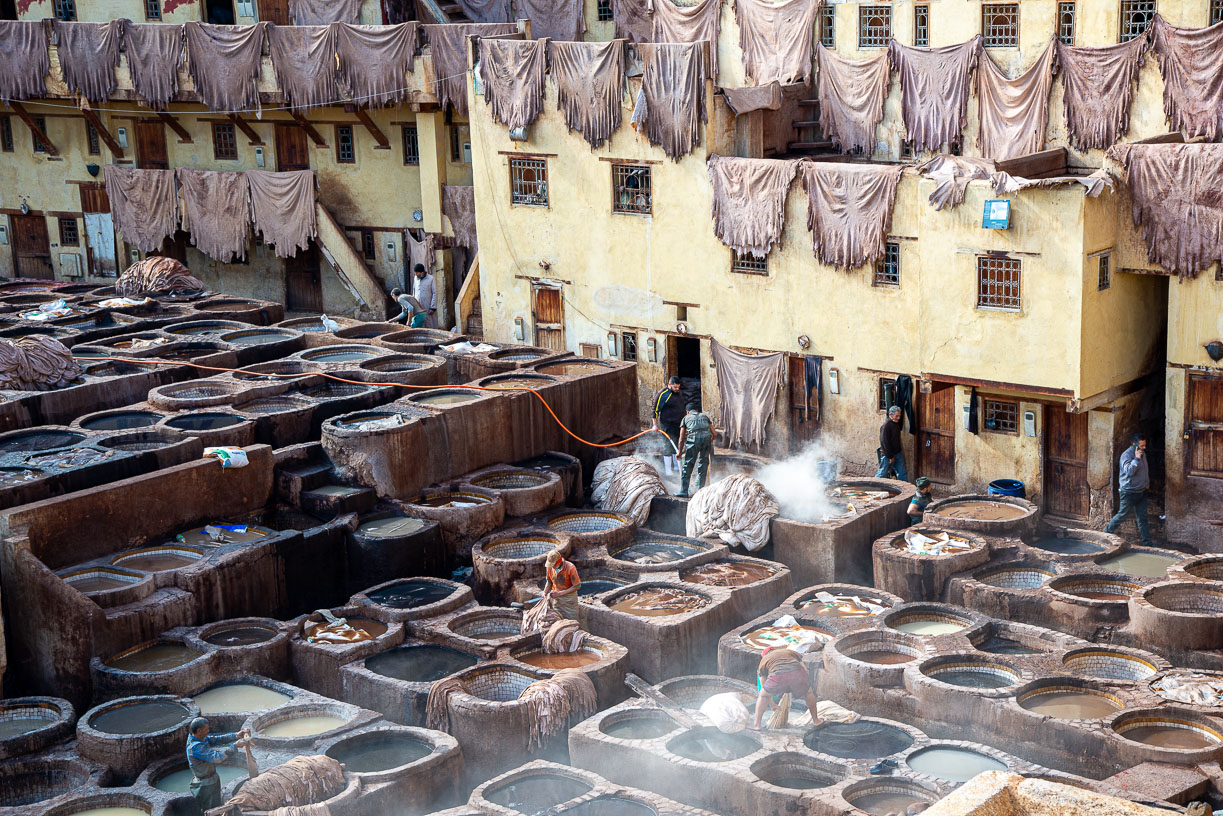
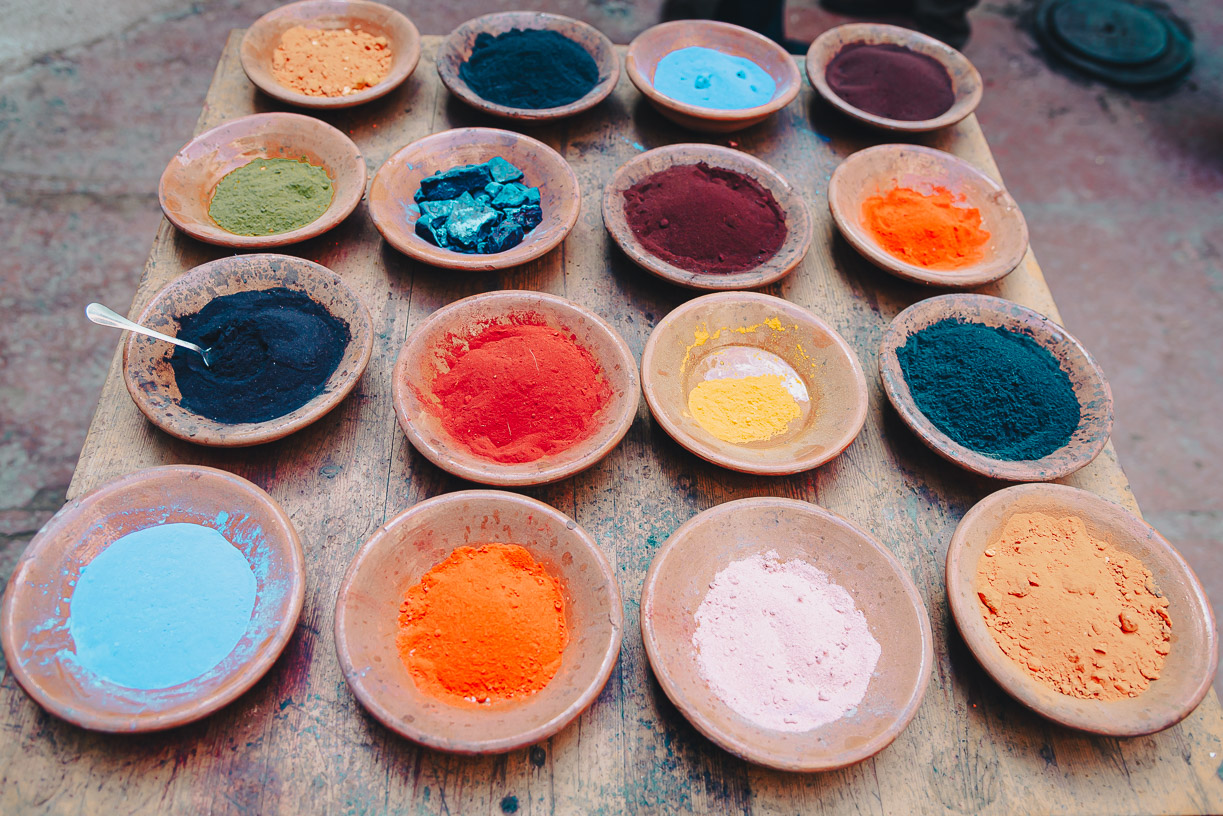
In the afternoon, find your way to the Chouara Tanneries. From the terraces above, you’ll witness one of the most iconic sights of Fez: vats of ochre, saffron, and indigo where leather is dyed by hand, a practice unchanged for a thousand years.
Later, climb to the Merenid Tombs overlooking the city. From this vantage point, the medina stretches out like a sea of terracotta rooftops, punctuated by minarets and the call to prayer.
The Souqs: Labyrinth of Craft and Colors
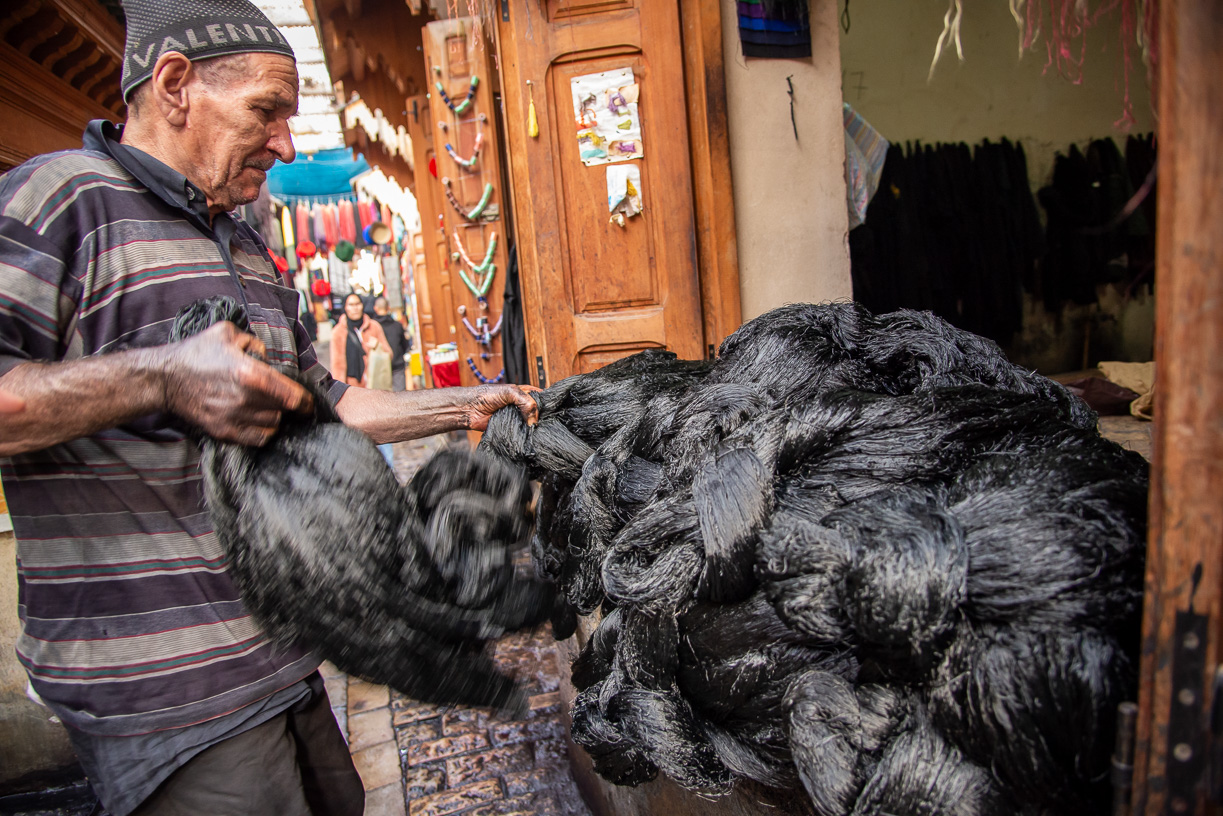
The next day stepping into the souqs of Fez is to enter a living museum of craftsmanship. Unlike tourist markets elsewhere, these alleys are working spaces where traditions are alive. Here, artisans shape copper into glowing trays, weave fine brocades on wooden looms, and dye wool in vats of vibrant saffron, indigo, and henna.
Each souq has its specialty: Souq el Henna sells natural cosmetics and healing clays, Souq el Attarine bursts with spices and perfumes, while the carpet souqs open onto courtyards filled with handwoven masterpieces.
Chefchaouen – The Blue Pearl of the Rif
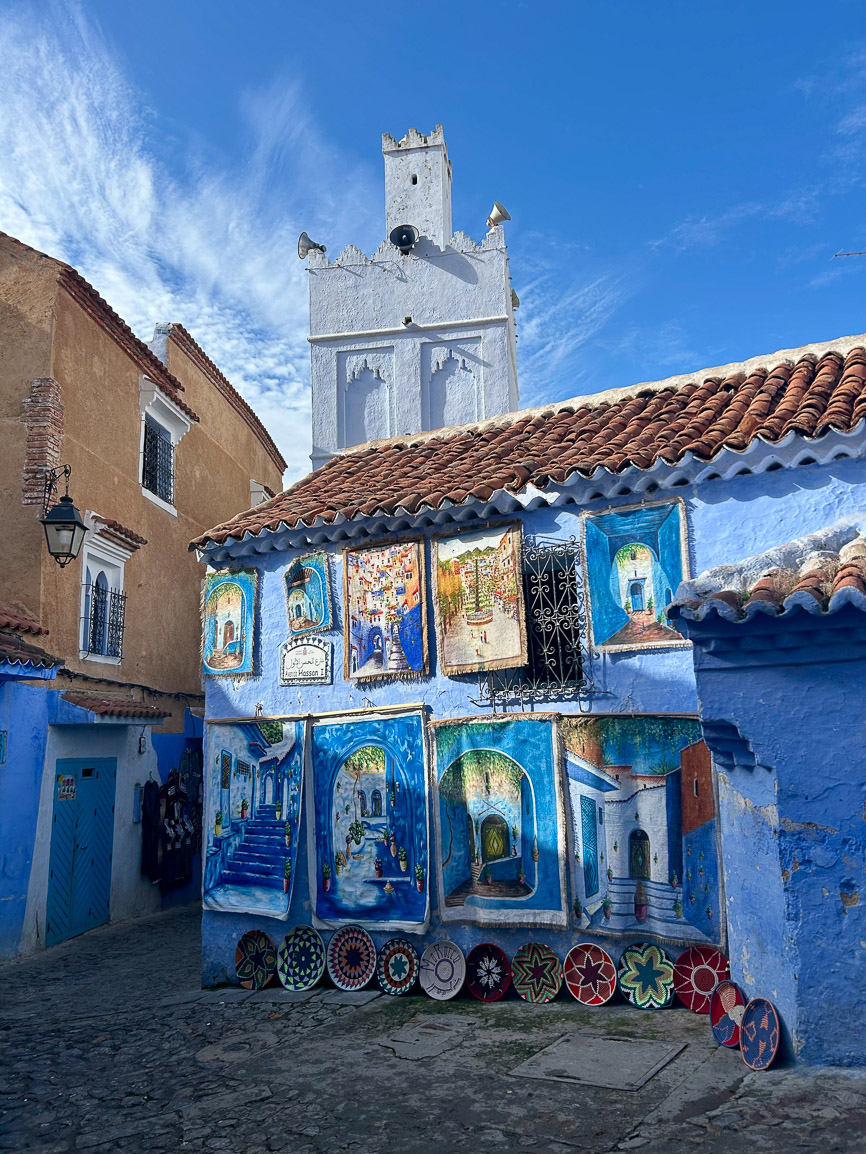
Your journey ends in Chefchaouen, nestled in the Rif Mountains. Its medina is a dreamscape of alleys painted in shades of blue, a place of calm after the intensity of Fez and the desert. Wander slowly: discover the Kasbah Museum, hike up for views over the city, or simply sit in a shaded square with mint tea as the day drifts by.
Chefchaouen is less about monuments and more about atmosphere—an intimate city where light and color turn every corner into a work of art.
 English
  Italian